
Key Takeaways:
- Identifying both where pain originates from and where it is spreading to can help diagnose underlying conditions.
- If more than 50% of pain is felt going down the leg, disc herniation may be the cause.
- If more than 50% of pain is felt in the lower back, lumbar stenosis may be the cause.
Pain from injuries or conditions are sometimes local to one area of the body. However, sometimes it can also spread to connected limbs, especially if the pain originates in the back. Being able to identify those extraneous pain spots can help to diagnose the underlying condition. A good example of this is disc herniation vs lumbar stenosis.
Both of these conditions can cause pain in the lower back and/or legs. But, as a general rule, if more than 50% of pain is felt going down the leg, it’s more likely to be disc herniation. If more than 50% of the pain remains localized to the lower back, it’s more likely to be lumbar stenosis.
Overview of Disc Herniation
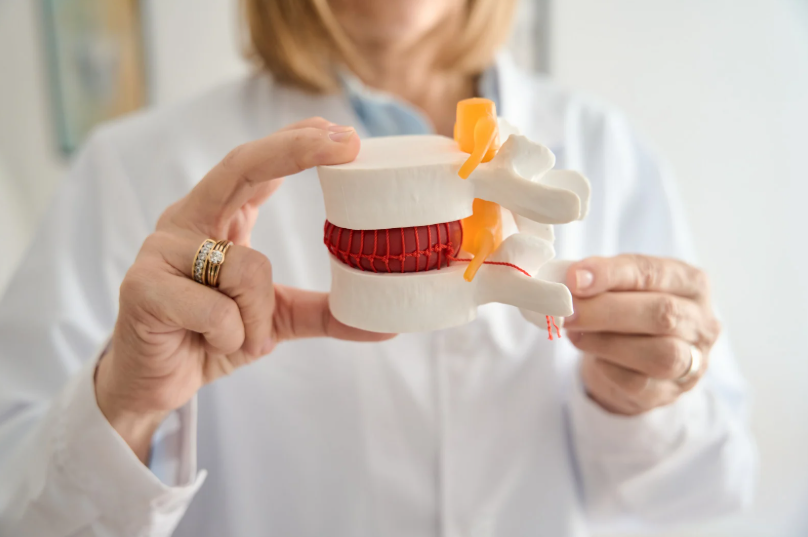
Disc herniation can also be known as a slipped disc, ruptured disc, or bulging disc. It is characterized by one or more of the discs that exist between spinal vertebrae bulging out and pressing on the spinal nerves, which causes pain.
Causes of disc herniation: A herniated disc can be caused by several factors. Unfortunately, not all of them are preventable. Age, genetics, lifestyle factors such as obesity and smoking, and repetitive overuse can all contribute to disc herniation (Ohio State University Wexner Medical Center).
Symptoms of disc herniation: Lower back disc herniation, or lumbar herniation, symptoms include nerve pain in your leg, also known as sciatica, numbness, tingling, or weakness
Treatment of disc herniation: Usually, conservative treatment like lifestyle changes, bed rest, heat, and over-the-counter pain medications can make a big difference. If the pain is insistent or limits your ability to complete day-to-day activities after trying conservative treatments, physical therapy, corticosteroid injections, or prescription pain medication may be implemented. Surgical treatments are rare and only a last resort (Harvard Health Publishing).
Other Possible Conditions That Cause Leg Pain
The sciatic nerve runs from the spine down the legs, which is why some back issues translate to leg pain. Disc herniation isn’t the only condition that can cause sciatic pain, though. Other common reasons that you may feel pain along your sciatic nerve are:
- Cauda equina
- Degenerative disk disease
- Foraminal stenosis
- Osteoarthritis
- Pregnancy
- Tumors, cysts or other growths
Overview of Lumbar Stenosis
Lumbar stenosis is a more specific diagnosis of the condition spinal stenosis, which can affect several different parts of your spine, not only the lumbar region. It is characterized by the narrowing of space within your spine, which puts pressure on the spinal cord and spinal nerves.
Causes of lumbar stenosis: Osteoarthritis is the #1 cause of lumbar stenosis. However, age, genetics, prior injury or surgery, tumors, preexisting health conditions and diseases, and other forms of arthritis can contribute to risk (Harvard Health Publishing).
Symptoms of lumbar stenosis: Lumbar stenosis can cause back pain and sciatica pain, but most of the pain is felt in the back. Other symptoms include numbing, tingling, cramping in the back and legs, foot drop, and erectile dysfunction (John Hopkins Medicine).
Treatment of lumbar stenosis: Except in emergencies, most cases of lumbar stenosis do not result in surgery. Lifestyle changes, physical therapy, and medicines like NSAIDS or steroid injections are more common treatments.
Other Possible Conditions That Cause Lower Back Pain
- Pregnancy
- Spondylolisthesis
- Facet Arthritis
- Annular tear
FAQs about Disc Herniation
- How long does it take to recover from disc herniation? Recovery time depends on the severity of the herniation, but most cases resolve between 6-12 weeks.
- When do I need to see a doctor for disc herniation? You should see a doctor right away if you experience loss of bladder or bowel control, numbness in the groin, an inability to walk, or extreme weakness in the legs.
- Can I exercise with a herniated disc? Yes, but gentle exercises that strength your core and posture will be the best for long-term pain management. Exercises that involve heavy lifting, deep bending, extreme torquing of the back, or spinal impact can make pain worse and should be avoided.
If you or someone you love suffers from nerve pain in the Louisville, Kentucky-area, board certified sports medicine physician Dr. Stacie Grossfeld at Orthopaedic Specialists PLLC can help. Orthopaedic Specialists PLLC is accepting new patients, and same day appointments are available. For additional information or to schedule an appointment, please contact Orthopaedic Specialists PLLC today at 502-212-2663.
Recent Comments