
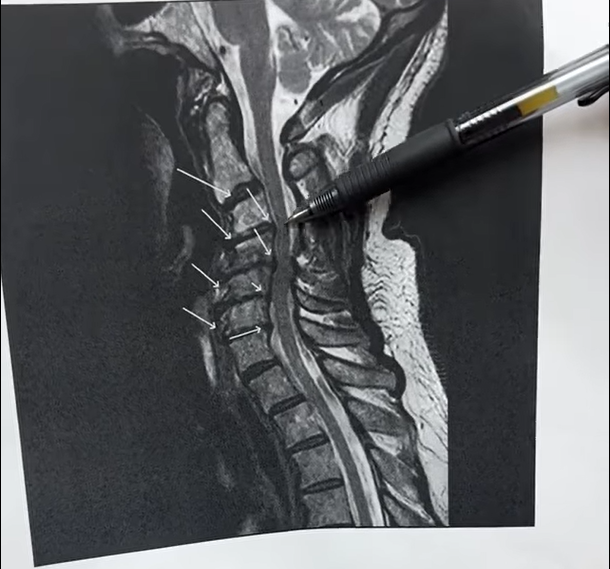
Taking a look at an abnormal cervical and neck MRI, Dr. Grossfeld points out where to look for abnormalities. Abnormalities in the cervical region of the spine can cause serious neck pain. Knowing where and what to look for can help doctors diagnose where the pain originates from.
Key Takeaways:
- Abnormalities in the cervical spine are commonly found in the vertebral bodies and vertebral discs.
- Normal vertebral bodies look square and do not push or bulge into the cerebrospinal fluid or the spinal cord itself.
- Normal vertebral discs look homogenous in both color and size.
Where to Look for Cervical Abnormalities
In most cases, cervical abnormalities will be found in either the vertebral discs or the vertebral bodies. On an MRI, normal-looking vertebral bodies will be square and positioned outside of the spinal cord and cerebrospinal fluid. Normal-looking vertebral discs will be dark and homogenous in size.
Vertebral bodies are the individual bones of the vertebral column that are cushioned by the vertebral discs, which are made of cartilage in two parts: annulus fibrosus (the outer portion) and nucleus pulposus (the inner core). They make up a majority of the spine, which protects the spinal cord and connecting nerves.
However, if they interact with each other and the cerebrospinal fluid and spinal cord in the wrong way, they can cause a lot of pain. Some of the most common causes of abnormalities of these two parts of the spine include:
- Disc Degeneration
- Herniated disc
- Cervical stenosis
- Osteoarthritis
- Cervical Spinal Cord Compression
How to Treat Neck Pain at Home
Neck pain can be caused by trauma or degenerative conditions, which are treated differently. If you have been hurt or are experiencing long-lasting neck pain, see a doctor for a diagnosis and unique treatment plan. However, most conservative neck pain treatment plans may include:
- Over-the-counter pain medications
- Physical therapy to strengthen neck, shoulder, and back muscles and improve flexibility
- TENS electrical nerve stimulation therapy
- Steroid injections to relieve inflammation
- Heat therapy
- Massage therapy
How to Prevent Neck Pain
Sometimes, neck pain due to cervical spine abnormalities appear due to factors out of our control, such as age or degenerative conditions. But, to help protect yourself from factors within your control:
- Strengthen and exercise the muscles in your neck, upper back, and core. This can help to protect your spine and is important for maintaining good posture.
- Practice healthy sleep habits. Invest in a supportive pillow that is made for your preferred sleeping position and try to keep your body aligned as your sleep.
- Stretch often. Making a habit of stretching keeps muscles and tendons from becoming inflexible and vulnerable to injury.
- Avoid carrying heavy weight on your shoulders frequently. Backpacks, suitcases, boxes, and other equipment are better off carried on wheels or with someone else to mitigate risk of injury.
If you or someone you love has suffered a neck injury in the Louisville, Kentucky-area, board certified sports medicine physician Dr. Stacie Grossfeld at Orthopaedic Specialists PLLC can help. Orthopaedic Specialists PLLC is accepting new patients, and same day appointments are available. For additional information or to schedule an appointment, please contact Orthopaedic Specialists PLLC today at 502-212-2663.


Recent Comments