
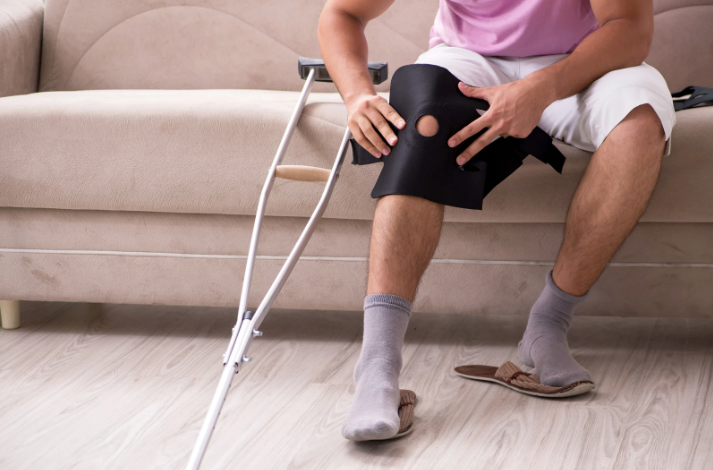
The ACL (anterior collateral ligament) and the MCL (medial collateral ligament) are ligaments of the knee that are very close together. These two ligaments experience tears more commonly than the other two ligaments of the knee, which include the PCL (posterior cruciate ligament) and LCL (lateral collateral ligament. The reason for this is because of the ACL and MCL’s placement and the higher risk of damaging movements or impacts to them.
Between the ACL and the MCL, an ACL tear is generally a more serious diagnosis. This is because the ACL is in the middle of the knee joint, where there is not a lot of blood flow that can heal the injury. Because the MCL is on the outside of the knee, these tears can sometimes heal on their own. Because ACL tears cannot heal on their own, they often require surgery.
However, if you sustain a knee injury, there will be distinguishing symptoms for both a torn ACL and a torn MCL.
Different Symptoms of a Torn ACL vs a Torn MCL
Torn ACL
Symptoms of a torn ACL can include:
- A popping sound when the injury occurs
- Knee pain, specifically on the outside of the knee
- Knee swelling
- Knee instability
ACL tears often limit the range of back-and-forth motion of the knee. Fully straightening the knee is particularly painful.
Torn MCL
Symptoms of a torn MCL can include:
- A popping sound when the injury occurs
- Knee pain, specifically on the inside of the knee
- Knee swelling
- Knee stiffness
- Knee instability
MCL tears often limit twisting or torquing motions of the knee.
ACL and MCL Tear Treatments
Torn ACL
Treatment for ACL tears usually require surgery. However, cases are determined by different factors. These include if your ACL tear is partial or complete, what your activity level is, and how bad your pain or other symptoms are.
If you have a minor partial tear and your activity level is low, you may be treated with rest, anti-inflammatory medication, and physical therapy.
Complete tears or ACL tears for those that partake in rigorous activity are normally recommended to undergo ACL reconstruction surgery and rehabilitation to avoid instability and other secondary knee issues in the future.
Torn MCL
Because torn MCLs have a higher rate of successfully healing themselves, these tears do not need surgery a majority of the time. Treatment usually include:
- The R.I.C.E. method, or rest, ice, compression, and elevation
- Physical therapy
- Assistance devices like mobility scooters, crutches, or braces
MCL and ACL Tear Doctor in Louisville, KY
Knee pain can be debilitating, especially for those with high-activity lifestyles or careers. A torn ACL and a torn MCL may seem serious, but there are plenty of examples of high-level athletes returning to their game after recovering from a knee injury. Diagnosis, treatment, and plenty of time for recovery and rehabilitation are critical to returning without issues, though. Don’t skip your physical therapy, and if you think you have an ACL or MCL tear, get it checked out before it gets worse!
If you or someone you love has suffered an MCL or ACL injury in the Louisville, Kentucky-area, board certified sports medicine physician Dr. Stacie Grossfeld at Orthopaedic Specialists PLLC can help. Orthopaedic Specialists PLLC is accepting new patients, and same day appointments are available. For additional information or to schedule an appointment, please contact Orthopaedic Specialists PLLC today at 502-212-2663.
Recent Comments