
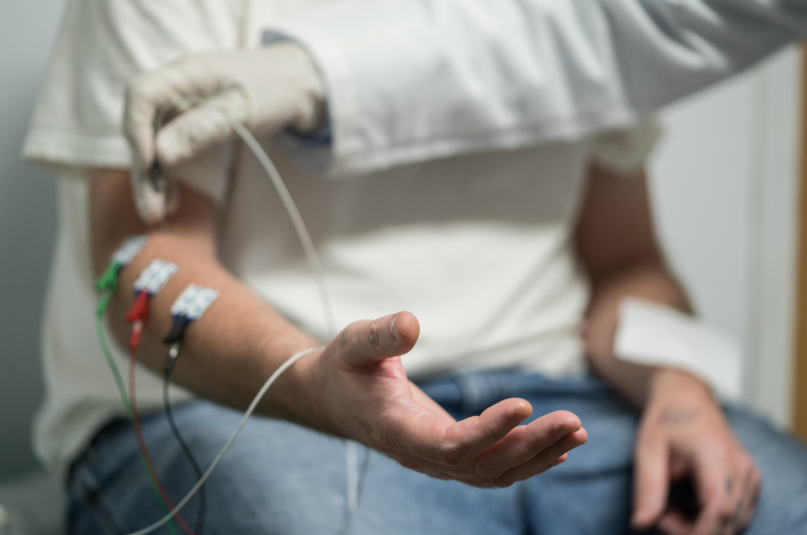
Your doctor may order an electromyography test, also known as an EMG nerve conduction study, if they expect that you have a nerve injury such as carpal tunnel syndrome, cubital tunnel syndrome, or a nerve laceration.
Key Takeaways:
- An EMG nerve conduction study is a test that checks how well your muscles and nerves are communicating with each other and if they are responding correctly.
- Common symptoms that might necessitate an EMG nerve conduction study include muscle weakness, tingling sensations in your extremities, muscle spasms, and paralysis.
- Carpal tunnel syndrome and cubital tunnel syndrome are both conditions that originate from pressure, inflammation, or injury to a nerve.
What is an EMG Nerve Conduction Study?
An EMG nerve conduction study tests the electrical signals your muscles make when they are at rest and when they are in use (Electromyography (EMG) and Nerve Conduction Studies, MedlinePlus). If they are responding correctly, a resting muscle will have no electrical activity and an in-use muscle will have consistent electrical signals that grow with the intensity of the movement.
What Should I Expect From An EMG Test?
During an EMG test, a doctor will insert a small needle with an electrode into the affected muscle, which is what records the electrical activity. Then, you will be guided to complete different movements, rests, and contractions with that muscle. The recorded readings will help get a clearer image of the muscle to nerve connection (EMG (Electromyography), Cleveland Clinic).
Your doctor also might utilize sticky electrodes to your skin above an affected nerve. Then, those electrodes are stimulated with small pulses of electricity, which in turn stimulate your nerves. The time it takes for your muscle to respond to the nerve will be recorded for analyzation.
What Symptoms and Conditions is an EMG Nerve Conduction Study Used for?
The most common symptoms that prompt an EMG include:
- Muscle weakness
- Tingling and/or numbness in your arms, legs, hands, feet, or face
- Muscle cramps
- Muscle spasms or twitches
- Partial or full paralysis of any muscle
Common conditions that cause these symptoms are:
- Carpal tunnel syndrome: Tingling and weakness in the fingers and hand due to a compressed median nerve.
- Cubital tunnel syndrome: “Funny bone” pain that occurs due to inflammation or irritation of the ulnar nerve near the elbow.
- Herniated disks: Back pain caused by the disks of your spine bulging out of place and putting pressure on the spinal nerves.
- Muscular dystrophy: A group of genetic diseases that causes severe muscle weakness.
- Amyotrophic lateral sclerosis (ALS): Also known as Lou Gehrig’s disease, this disease attacks nerves in the brain and spinal cord, affecting most muscles of the body.
Frequently Asked Questions About EMG Nerve Conduction Studies
- Does an EMG nerve conduction study hurt?
- No, an EMG nerve conduction study should not cause a lot of pain. There may be a small amount of pain when the doctor inserts the needle, and may experience tingling sensations from the electricity. If the test begins to cause a lot of pain, let your doctor know.
- What happens if your EMG is positive?
- A positive EMG test normally indicates an abnormality between your nerves and muscles. Your next steps will depend on the symptoms you were experiencing, the muscles and nerves that were tested, and your medical history.
- How do you prepare for an EMG test?
- Your specific provider will likely give you a unique list of preparations. However, one of the most important preparations is to ensure your provider knows if you have a pacemaker, cardiac defibrillator, or other electrical medial device.
If you or someone you love is suffering from a nerve or muscle related injury in the Louisville, Kentucky-area, board certified sports medicine physician Dr. Stacie Grossfeld at Orthopaedic Specialists PLLC can help. Orthopaedic Specialists PLLC is accepting new patients, and same day appointments are available. For additional information or to schedule an appointment, please contact Orthopaedic Specialists PLLC today at 502-212-2663.
Recent Comments