
Patient of the Month Sam Shaheen

Meet this month’s patient in the spotlight, Sam Shaheen!

Sam owns and operates Shaheen’s, a 4th generation department store located in The Springs Store on Breckenridge Lane in Louisville, KY. Established in 1922, Shaheen’s has continued to serve the Louisville community with their clothing needs by offering custom in-house embroidery and work apparel. Throughout the pandemic, they have been deemed essential because of the work they do for area hospitals.

sam shaheen

Recently, Sam suffered from a large Achilles tendon tear. While he can’t point to the exact cause of the injury, Sam suspects it is due in part to the many years he used to compete in road races, (racking up 60 miles a week) as well as a fractured leg from his time in the Army.

Luckily, Sam is recovering nicely after receiving treatment from Dr. Grossfeld. At the age of 68, Sam enjoys keeping up with his yard and playing a round of golf in his spare time.

Working from Home: Ergonomics

Working from home has become a new norm for many people during the coronavirus pandemic. There are a few challenges that come with setting up a workspace at home. Here’s an overview of what you should consider related to ergonomics in a home office.

Physical Setup

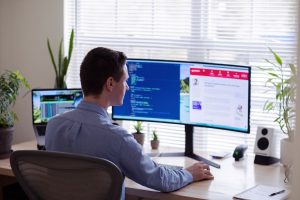
The physical layout of your workspace is a great place to start. If you sit while working, the chair you use is important. It should be supportive for your spine, and should allow you to rest your feet flat on the floor. You can also use a footrest to keep your feet flat if that works better for you. Additionally, if your chair has armrests, they should keep your arms in a neutral position. If you are using a desk, it should have room for your legs beneath it and should be compatible with your chair to create an ergonomic position.

If you are using a monitor or laptop, the screen should be about an arms length away from you and should be at or just below eye level. A keyboard and mouse can also be helpful, and can be set up to allow your arms to rest parallel to the floor. Last, any other accessories you need, from paper to pens and phones, should be within easy reach on the desk and should not require reaching.

Of course, some people prefer standing desks, which are a great option as well. If you use a standing desk, make sure you wear supportive shoes and stand in an upright position. A footrest or pad can help alleviate pressure from the floor as well. Otherwise, the same principals for sitting desk setups apply.

Body Positioning for Ergonomics

You also need to pair good body positioning with your layout for ergonomics. As alluded to before, your arm positioning is crucial. Your elbows should rest flat with the desk surface. This helps create the best wrist alignment. Additionally, you should not hunch over your work. Keep your back and neck straight whether you are using a chair or standing. Your monitor setup should allow you to keep your eyeline parallel to the floor, or at a slight downward angle.

Good Movement Practices

There are a few movement-related practices you should consider for ergonomics as well. For one, it can be easy to stay in the same position for long periods of time at home. There may be fewer opportunities for movement and interaction than in the office. Make sure you get moving regularly, every 30 minutes or so. This helps you break up static body positioning and avoid injuries that can develop from poor body positioning and movements. Even just a short break or walk can be helpful. Eye strain can be an issue as well. To avoid this, make sure you take an eye break from work every 20 minutes or so. You can simply look away from your work and focus on something farther away for about 20 seconds. This gives your eyes a needed break.

You should seek diagnosis and treatment from a qualified medical professional like Dr. Stacie Grossfeld if you are injured and want to get back to the activities you love. To schedule an appointment with Dr. Grossfeld, call Orthopaedic Specialists at 502-212-2663 today.


Patient of the Month Miranda Der Ohanian

Meet this month’s patient in the spotlight (and newlywed) Miranda Der Ohanian!

Miranda Der Ohanian

When asked what it was like to plan a wedding during the pandemic, she said, “Planning a wedding during a pandemic meant throwing all our plans out the window. Thankfully my husband and I wanted a small wedding and our church was equipped to accommodate the number of guests for both the ceremony and reception with social distancing measures. With the help of family and friends we made all the decorations and made the main dishes for the reception. To support our local community we purchased sides from our favorite restaurants. We were thankful to have help from friends at church to serve food and keep everyone safe and healthy. In the end, we had a perfect day sharing our love before God and our family and friends.

In addition to her wedding, Miranda recently endured several foot fractures.

“Having never broken a bone before, living through 6 fractures in my foot has been a learning experience. The first few weeks I lived in a recliner. Most days were counted in hours from pain meds, ice, heat, repeat. The knee scooter was an unexpected blessing. I felt a measure of independence having it. After 8 weeks of no walking and using the scooter, I was afraid to try to put weight on my foot, but did it anyway. After another month, I started PT. Even now, walking and going up and down stairs is difficult for me. PT continues and movement is slowly returning. The worst part of recovery for me was not being able to help my family. We had just moved into a new house and instead of helping, my parents and (then) fiance now had to care for me AND unpack. I am blessed to have a loving family who helped me through this process and made our home beautiful in the process.”

Dr. Grossfeld and Angel have been instrumental in my recovery. Without their medical care and encouragement, I would not have been able to make such progress. They communicated all the possibilities to me along the way and kept me safe so I could heal properly. When it was time they allowed me to work, then add light pressure to my foot and eventually walk. They knew I was getting married and did what they could to make sure I would walk down the aisle to my husband and do so without a boot on my foot. I am eternally grateful to them for the progress I have made and that my bones have healed!”

Pandemic Injuries

The pandemic has changed the way we live, work, and play. Because of this, there are a multitude of emerging injuries due to changes in how we move and position our bodies. Let’s take a look at some of the most common non-coronavirus related pandemic injuries.

Injuries Working from Home

Many workers have found themselves working from home due to the pandemic. Our homes may not be the best setups for office work, and this can lead to several different injuries. Makeshift home workspaces have replaced office setups. This can mean less supportive chairs, weird table heights, and more. Unsurprisingly, back pain, neck pain, and other musculoskeletal injuries are on the rise.

For many people, un-ergonomic setups have led to overuse injuries as the pandemic stretches on. If your chair or table is an improper height, you may be looking up or down too much to view a computer screen or positioning your arms awkwardly while you write, type, or create.

Additionally, you might find yourself moving around less during the day than you did at the office. This means longer stretches of time in the same position, which can be devastating if it’s a harmful one.

To avoid issues, try your best to create an ergonomic setup. Avoid leaning over or hunching and try to have a table height that matches where your elbows fall. Try to use an office chair if you are sitting too. Also, try to work in some movement throughout the day to break up long bouts of being stationary.

Exercising Too Much, Too Fast

Being cooped up inside has led to an increase in people trying new (or long-forgotten) activities. While this can be a healthy decision, doing too much too quickly can easily lead to overuse injuries. Many people have experienced injuries from doing just that during the pandemic. As a general rule of thumb, always ease yourself into a new activity and gradually build up your intensity and time. Your body takes a long time to get used to the strain of a new activity. Too much new exercise too quickly can cause undue musculoskeletal stress. You should also focus on proper form early on- developing good form from the start can help you avoid overuse injuries.

Trauma Injuries on the Rise

There have also been more of certain exercise-related trauma injuries during the pandemic. For example, with fall sports starting up in many places, injuries are more common than usual. Some of this is linked to higher rates of sedentary behavior throughout the pandemic. Starting back up with exercise all at once puts our bodies at risk.

Some are overuse injuries as alluded to before. Others, though, are trauma injuries like ankle sprains, torn ligaments, and fractures. This has some link to the same sedentary patterns: our bodies are less durable if we are not continuously performing an activity. Going back into a sport that involves quick movements, for example, can lead to a higher risk of ankle-related injuries. Muscles and tendons are not as developed, leading to less stability. With less stability comes that risk of injury.

You should seek diagnosis and treatment from a qualified medical professional like Dr. Stacie Grossfeld if you are injured and want to get back to the activities you love. To schedule an appointment with Dr. Grossfeld, call Orthopaedic Specialists at 502-212-2663 today.
The Importance of Staying Active During the Pandemic

The coronavirus pandemic has left many of us feeling isolated, stressed, and anxious. The negative impacts of this isolation can be significant in relation to all aspects of health and wellness. Fortunately, by structuring some physical activity into your day, you can improve your health outlook significantly. Here are a few ways staying active during the pandemic is beneficial for your health and wellbeing.

Known positive health outcomes

Physical activity helps your body stay healthy in a variety of ways that are particularly important in relation to coronavirus. Regular activity can reduce blood pressure, help you manage weight, and reduce your risk of heart disease, type 2 diabetes, cancer, and stroke, just to name a few things. All of these are positive impacts in relation to coronavirus, as these conditions are risk factors that increase your susceptibility to the coronavirus.

Focus on mental health: managing anxiety, stress, depression, and more

We know that in general, physical activity has positive benefits for mental health as well. There are myriad potential benefits including stress reduction, better management of depressive symptoms, elevated self-esteem, better sleep, and anxiety management. It’s not just general positive benefits that are in play, though. There may be some benefits specifically in our pandemic context. Take the findings of one preliminary study from May 2020 that looked at behavior during initial lockdown in the United States in April. It found that people who remained active during weeks of sheltering in place were more mentally resilient and less depressed than people who decreased in activity level.

Another intersection: substance use reduction

Activity can help with another important phenomenon that intersects with mental health in this pandemic: substance abuse. We know that some activity can reduce the use of substances. This is crucial during our current pandemic. Take alcohol use for example. Alcohol sales increased 26% across the country between March and June (compared to last year), and many people have increased their alcohol consumption. A study from RTI in June surveyed 1,000 adults in the US about their daily alcohol intake in April compared to February. On average, respondents drank significantly more in April, with a higher incidence of excessive drinking as well. Women, unemployed people, parents, adults with mental health concerns, and Black people experienced some of the largest increases in consumption.

Reducing substance use can help increase immunity, and can lead to more positive mental health outcomes. Activity can play a key role here, and is particularly important in our pandemic context.

Ways to be active

It can seem like physical activity is harder than usual with so many ongoing social distancing and lockdown protocols. In some ways, this is true. Fortunately, though, there are a lot of creative ways you can still be active either by yourself or with others. Many businesses are leaning into online delivery for fitness programs. Yoga, meditation, spin classes, and many other opportunities are more and more available for you to engage with online. You don’t have to be online access to be active either- getting outside in your neighborhood or creating an in-home training setup are great options too. Check out these great resources on staying active during the pandemic from the ACSM for more ideas.

If you are trying to return to activity after being sick with the coronavirus, you should seek guidance and treatment from a qualified medical professional like Dr. Stacie Grossfeld. To schedule an appointment with Dr. Grossfeld, call Orthopaedic Specialists at 502-212-2663 today.

Returning to Exercise After Having Coronavirus

The coronavirus pandemic continues to evolve, as does our understanding of what the virus does to our bodies. There is emerging research that points to potential harm if you exercise while infected or too soon after being infected. Let’s take a look at the research.

Difficulty returning to activity after having coronavirus

One area we have some insight on is related to return to activity after having coronavirus. People can have a range of symptoms with varying severity, with some not even having any symptoms at all. However, anyone who has had coronavirus should be cautious when returning to activity after the initial infection. With over two million people in the United States who have recovered from the virus, there are plenty of reports of people experiencing difficulty returning to their previous level of activity. Shortness of breath, lingering fatigue, and chest tightness seem to stick around a long time.

What’s the safest way to return to exercising?

We are still learning a lot about the coronavirus and how it impacts us. As such, guidance continues to evolve. In general right now, doctors are recommending you take it slow when getting back into any exercise or activity after being infected. Listen to your body and don’t push it too much. In more severe cases, even more caution is required when getting active again.

The Hospital for Special Surgery Sports Medicine Institute recently laid out some more specific guidelines for recreational athletes who had mild and moderate cases, based on what symptoms you experienced from coronavirus. These are subject to change, of course, as we learn more. They currently recommend the following:

  • If you had blood or hematologic symptoms: start with low-intensity exercise and limit sedentary behavior to reduce blood clot risk.
  • For respiratory symptoms: rest for at least a week after symptoms go away, and gradually return to activity thereafter. Monitor your breathing as you do so.
  • If you had cardiac symptoms: rest for two or three weeks after symptoms subside. If you had myocarditis (heart inflammation), wait at least three to six months before returning to an exercise routine.
  • For gastrointestinal symptoms: monitor your fluid and caloric intake while returning to activity.
  • If you had musculoskeletal symptoms: take a gradual approach when returning to activity.
  • If you had no symptoms: gradually return to activity if it has been at least a week without symptoms showing up. Return at 50% of activity level to start with, and then increase slowly from there.
  • To reiterate, these are evolving guidelines for recreational athletes who had mild or moderate symptoms. Take it slowly, and consult your doctor to make sure you are returning to activity safely.

The importance of taking it slow

Why is all of this so important? The coronavirus appears to often take a significant toll on our bodies, even if we have a mild or asymptomatic case. For example, a study of 100 people who had recently recovered from coronavirus showed some troubling trends related to heart health. After undergoing cardiac MRIs, 78 of the 100 participants showed structural changes to their hearts, and 60 of the 100 had myocarditis. None of the participants had severe cases of coronavirus- half had mild or moderate symptoms, and 18% were asymptomatic. None of the participants had any cardiac symptoms while they were ill. Unaddressed, myocarditis can cause significant complications, including sudden death in severe cases.

This example goes to show how serious we are discovering the coronavirus’ impact to be. We are learning more and more each day. So, if you were sick and are itching to get back into your exercise regimen, take it easy and make sure you talk with your doctor.

If you are trying to return to activity after being sick with the coronavirus, you should seek guidance and treatment from a qualified medical professional like Dr. Stacie Grossfeld. To schedule an appointment with Dr. Grossfeld, call Orthopaedic Specialists at 502-212-2663 today.

Patient of the Month Sherry Hughes

Meet this month’s patient in the spotlight Sherry Hughes!

Sherry Hughes
Originally from Louisville, Sherry has been married for almost 49 years and has two grown and married daughters Ellen and Jane. In her spare time, she enjoys having the opportunity to care for her 4 grandchildren – 3 girls and 1 boy. “I love my role as “Grammy!”
A graduate of the University of Louisville, Sherry followed her father’s footsteps by pursuing a career with South Central Bell. Now retired, Sherry has pursued several part-time jobs over the years, including Pottery Barn Kids and now at Hadley Pottery.
“My passion for collecting all of my dinnerware first began while sitting in the bargain aisles and inspecting the remnants before I got married to very recently working in the retail store a few days a week now.”
Recently, Dr Grossfeld helped Sherry through some painful episodes with her feet after an injury was misdiagnosed by another provider and she was recommended to the Orthopaedic Specialists. Luckily, since her treatment with Dr Grossfeld, Sherry’s discomfort has been kept to a minimum until her most recent shoulder injury.
“This summer on June 1st, I tripped over our dog’s bed out on our deck and took a very ungraceful fall which caused my right shoulder to be dislocated.  I saw the doctor the following day and was given some pain medication and instructions on how to handle this new inconvenience. Since then I have seen Dr Grossfeld who prescribed physical therapy and also gave me a cortisone shot to alleviate the discomfort, especially while sleeping.  All of this has helped and the shoulder is improving!”

Preventing Overuse Injuries

Overuse injuries. They can stop you in your tracks and prevent you from moving your body the way you want to. Fortunately, there are a few things you can do to mitigate your chances of developing an overuse injury. Read along to find out some general rules you can follow to stay healthy.

Gradual Increases

One of the most common ways people can experience an overuse injury is by taking on too much too fast. It’s all too easy to get in over your head with a new type of exercise or activity. Doing too much of an unfamiliar exercise in a short timeframe puts a lot of stress on the body, in ways it is not adapted to yet. To avoid this, you should always gradually build up your intensity in and time spent on a new activity.

Adequate rest time is an important practice here as well. Your body needs time to recover from hard work, particularly when it is not used to a certain type of work. When you start out with something new, it’s always smart to err on the side of caution and incorporate plenty of rest between workouts. Over time, as your body adapts, you may be able to adjust the amount of rest you take.

Develop Good Form to Prevent Overuse Injuries

Improper form is another way that overuse injuries can occur. If you are moving your body in an inefficient and improper way, it’s easy to overload specific muscles, tendons, and joints. Just like you should gradually build up your workload for a new exercise, you should slowly develop proper form right from the beginning. This way, as you practice more you will develop sustainable movement and help prevent chronic issues from arising.

Get the Right Gear

Depending on the activities you enjoy, you may need more or less specialized equipment to stay healthy. In general, though, the right gear can be a significant factor in your chance of developing an overuse injury. For instance, if you take up cycling and ride on a bike frame that’s too small for a while, you may develop a sore back, knees, and ankles, among other things. Or, if you’re taking up walking or running but do not have well-fitting supportive shoes, you might develop joint pain. Make sure you get the right fit for your activities- it can make a huge difference.

Cross-training is Your Friend

Regularly doing different types of activity that work different parts of your body is key to prevent overuse injuries. Variety is a powerful tool to help you both stay active and healthy. For example, if you love to run, you could consider cross-training with some cycling, core work, weightlifting, and climbing, just to name a few options. It can be tempting to simply put in more time with what you are really focused on. However, that can be a recipe for an overuse injury. When you cross-train, your body uses different muscle groups and is less likely to overload any one area.

If you are injured and you are concerned that you may have an overuse injury, you should seek diagnosis and treatment from a qualified medical professional like Dr. Stacie Grossfeld. To schedule an appointment with Dr. Grossfeld, call Orthopaedic Specialists at 502-212-2663 today.
Why Does My Knee Hurt?

Why Does My Knee Hurt?

Why does my knee hurt? This is a common question I get asked as an orthopedic surgeon  https://louisvillebones.com. For instance, common causes of knee pain are osteoarthritis, cartilage tears or  ligament injury. Knee pain can start after an injury . In addition, it can also start after overuse.  Knee pain may occur with changes in the barometric pressure.

The ACL is a Common Ligament Torn in Sports Injuries

An injury to the knee can cause a ligament tear https://orthoinfo.aaos.org/en/diseases–conditions/anterior-cruciate-ligament-acl-injuries. The most common sports related ligament that gets injured is the ACL (anterior cruciate ligament). This is the ligament that provides stability to the knee joint. Therefore  it prevents the knee from shifting forward. ACL injuries occur while running with quick change of direction . In addition, another  mechanism of injury can occur with landing from a jump or a sudden stop. Tearing of the ACL causes  a pop felt in the knee . The knee swells within 12 hours of the injury.

The Meniscus is the Most Common Cartilage Torn in the Knee

There are two different meniscus in each knee joint. Each one acts as a shock absorber in the knee. In other words, they help to cushion the joint. The meniscus typically tears from an injury. In contrast, as we age they can tear with normal daily activity and no trauma. A torn meniscus causes a sharp localized pain in the knee joint with twisting activity. In addition, it also cause swelling. Painful range of motion can also be present with a meniscal tear.


Osteoarthritis Can Cause Knee Pain

Osteoarthitis is a process where the cartilage that covers the ends of the bones in a joint breaks down. For instance , some symptoms  of knee arthritis range from morning stiffness, swelling, pain, lose of range of motion, and angular deformities of the knee joint https://orthoinfo.aaos.org/en/diseases–conditions/arthritis-of-the-knee/. Above all, genetic predisposition causes osteoarthritis . Arthritis in the knee occurs from being overweight. The natural aging process causes knee arthritis . Trauma such an intra-articular fracture can cause post -trauma arthritis in the knee joint. The pain quality associated with osteoarthritis tends to be a dull throbbing aching pain that can also occur at night .

An Overview of Radial Tunnel Syndrome

Radial Tunnel Syndrome (RTS) is a chronic condition caused by pressure on the radial nerve. This nerve runs the entire length of the arm, starting in the armpit and running along the outside of the arm to the hand. At the elbow, the nerve goes through what is called the radial tunnel, a thin space made of bone, muscle, and tendon. RTS can be caused by compression on any point along the length of the radial nerve. However, it is named after injury to the radial tunnel itself, where it is especially common.

Symptoms and Causes of Radial Tunnel Syndrome

RTS is often difficult to diagnose due to its similarity in symptoms to more common conditions such as Tennis Elbow and Carpal Tunnel Syndrome. Generally, RTS is characterized by dull, aching pain in the elbow or top of forearm, but can sometimes reach down the forearm and into the back of the hand and wrist. Besides pain, symptoms include weakness, tenderness, and tingling. Patients often have difficulty flexing fingers or rotating the wrist, due to the discomfort. The pain often gets worse at night, too.

Common causes of RTS are repetitive motion and overuse of the arm. Routine pushing, pulling, and twisting can cause RTS, often through sports or physically repetitive jobs like manufacturing. Direct injury such as bone fractures or tissue damage can also cause RTS. Some diseases can make you more susceptible to RTS, such as diabetes or low thyroid.

Treatment and Recovery

If diagnosed with Radial Tunnel Syndrome, there are many forms of treatment available. Treatment is normally based on the cause and the severity of the RTS.

If the RTS is caused by repetitive motions, simply removing those motions from daily life can provide relief. Splinting the arm or wearing a wrist brace to limit motion can also be beneficial. To build strength, physical therapy exercises may be added and continued over time. To reduce discomfort, electrical stimulation, icing, and anti-inflammatory medications are often recommended. Corticosteroid injections are often considered as a non-invasive treatment option to relieve pressure on the radial nerve.

Surgical Option

When the above methods fail to work within 4-6 weeks, surgery is an option. Surgical treatments aim to release the points of pressure on the radial nerve by cutting the compressing tissues, often directly at the radial tunnel itself. A week after surgery, patients can begin recovery exercises and continue physical therapy for several months.

Recovery depends on one’s effort to uphold treatment guidelines and prevent opportunity for re-injury. Additionally, maintaining arm strength and properly warming up before exercise decreases risk of RTS. Reducing repetitive activities long-term can lower the odds of re-injury. Regular exams are also recommended to ensure prevention.

If you are injured and you are concerned that you may have radial tunnel syndrome, you should seek diagnosis and treatment from a qualified medical professional like Dr. Stacie Grossfeld. To schedule an appointment with Dr. Grossfeld, call Orthopaedic Specialists at 502-212-2663 today.