10 Symptoms of Carpal Tunnel Syndrome

carpal tunnel syndromeCarpal tunnel syndrome is a common condition that causes numbness, tingling, weakness, and other discomforts in your hands and fingers. A pinched median nerve in your wrist causes these discomforts. The median nerve, along with other related tendons, travels from your forearm to your hand inside a small space called the carpal tunnel. This nerve supplies feeling and movement to your thumb as well as your first three fingers. When the median nerve is under pressure or becomes pinched, it is called carpal tunnel syndrome.

Carpel tunnel syndrome is the most common type of entrapment neuropathy and is sometimes confused with other illnesses such as hypothyroidism, rheumatoid arthritis, and diabetes. Repetitive movements, such as typing, texting, using a computer mouse, and oddly enough, even pregnancy, can cause some common carpal tunnel symptoms. These include things like swelling, tingling, and numbness in the thumb, index finger, middle finger, and half of the ring finger. If you are experiencing these symptoms in your little (or pinky) finger then this is a good indicator that your symptoms are not related to carpal tunnel syndrome.

Carpal tunnel symptoms can be confused with other medical conditions or illnesses, so consult a qualified medical doctor for a complete examination. Read 10 carpal tunnel symptoms as detailed by board certified orthopedic surgeon and sports medicine physician Dr. Stacie Grossfeld.

10 Symptoms of Carpal Tunnel Syndrome You Should Know

Numbness

This is the first indicator that something may be wrong. Pressure on the median nerve causes numbness or tingling in your hand and fingers. Usually the numbness related to carpal tunnel will wake you up in the middle of the night.

Tingling

Like numbness, carpal tunnel can cause a “pins and needles” feeling to your hand and fingers.

Pain

Carpal tunnel can be somewhat painful, making repetitive movements more difficult.

Stiffness

Usually people with carpal tunnel will experience stiffness in the hands, fingers, and wrist. This stiffness is usually more severe in the morning.

Weakness

The compression in your wrist, hands, and fingers may cause weakness. Carpel tunnel syndrome often makes holding objects or writing more difficult.

Elbow Pain

It is not uncommon for people with carpal tunnel syndrome to have pain or tingling in the elbow.

Difficulty Falling Asleep

Carpal tunnel syndrome causes tingling and pain which distracts the mind and makes it harder to fall asleep. The constant pins and needles feeling may make it difficult for you to relax and get a good night’s sleep.

Pain in One Hand More than the Other

Generally people with carpal tunnel will experience more severe symptoms in one hand than the other. This is due to repetitive movements and left or right hand dominance.

Shoulder Pain

Many people with carpal tunnel syndrome have even experienced pain, tingling, or numbness running all the way from their shoulder down to their fingertips. Where you feel pain completely depends on where the pressure on your nerve is located.

Decrease in Grip Strength

Along with weakness in hand and finger muscles, carpal tunnel syndrome may make it difficult for you to hold relatively easy to grasp objects and open containers.

Carpal tunnel symptoms can be unnerving, pun intended! If you are experiencing any of these symptoms regularly and if everyday activities are becoming difficult, it is worth a visit to your doctor’s office. A thorough physical exam will identify carpal tunnel syndrome.

Most of the time home treatment options for carpal tunnel syndrome are successful. Change activities that are causing pain along with physical therapy. You may also be prescribed nonsteroidal anti-inflammatory drugs to reduce inflammation. If your condition worsens, surgery may become an option.

It is best to treat this early before any carpal tunnel symptoms lead to long-term effects. For more information about this condition or to schedule an appointment in Louisville, Kentucky, with a board certified orthopedic surgeon, call Dr. Grossfeld’s office at 502-212-2663.

Dr. Grossfeld Attends Bingham Fellows Program Class of 2016 Graduation

Bingham Fellows Program in Louisville KentuckyDr. Grossfeld was privileged enough to be invited to the Bingham Fellows Program Class of 2016 graduation at Actor’s Theater in the Victor Jory Theatre. Dr. Grossfeld serves on the Board of both the Louisville Sports Commission and the YMCA at Norton Commons, and the CEO and President of both organizations were a part of the 2016 graduating class. Dr. Grossfeld elaborates:
It was an enlightening experience and it exposed me to some amazing organizations in Louisville Kentucky that I did not know about. It was amazing to see both of the organizations that I work with be brought together under the same umbrella for this event.

The Bingham Fellows Program was created by the Leadership Louisville Center in 1979, and it is regarded as one of the region’s most valuable resources for leadership development and civic engagement. In 2011, the Leadership Louisville Center has been recognized as one of the top seven community leadership programs in the U.S in a benchmark study by the Center for Creative Leadership.

Along with the Bingham Fellows Program, the LLC also sponsors Focus Louisville, Ignite Louisville, Leadership Louisville, and Encore Louisville.

The mission for each Bingham Fellow class is determined every year. This year’s project was titled “Empower Citizens to Live Healthier Lives.” The goal of the Class of 2016 Bingham fellows is to foster a culture of health and greater health equity. Louisville, unfortunately, has the distinction of being rated as 48 out of 50 of the largest metro areas in the U.S. in terms of fitness. Louisville is also ranked as the fifth unhealthiest city in America.

There were 36 people chosen this year to participate in the Bingham Fellows Program. Participants included: doctors, vice presidents of Fortune 500 companies, religious leaders and local small business owners. All of the participants in the Bingham Fellows Program had a unique background along with a different talent that they brought to the table.

Louisville 2016 Bingham Fellows Program Includes 5 Unique Groups

The Bingham fellows were broken up into 5 groups: Louisville Active, SaturPlay, Smoketown Family Wellness Center, Smoketown Laundry and Healthy Teen Break-Up Summit.

Louisville Active was created to start a culture of active lifestyles by creating new urban walking groups as well as expanding existing ones. Louisville Active will partner with the Louisville Sports Commission to broaden programming along with healthcare organizations, social service organizations and local businesses to share best practices. These ideas will all be implemented into a city-wide marketing campaign. Louisville Active will remain as an ad hoc committee of the Louisville Sports Commission. I am the current chairperson of the Louisville Active committee, and also member of the Louisville Sports Commission executive committee.

SaturPlay: building healthy bodies and strong character in kids aged 9-13 through a cooperative partnership with the YMCA, Dare to Care, Metro Parks, and the Shawnee Boys and Girls Club.  This program is run over a six week period at the Shawnee’s Boys and Girls club. There is fun, physical play in a safe environment along with two servings of a healthy snack that kids help to prepare.  One snack can be eaten on site and the other snack can be taken home with them to prepare at a later time.  Dare to Care supplied a registered dietician and chef to help teach the kids about healthy eating and easy healthy snack preparation. (more…)

Dr. Grossfeld Picked for Pumpkin Decorating Contest

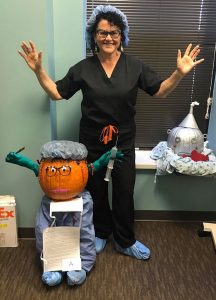
dr-grossfeld-next-to-pumpkin-from-pumpkin-decorating-contestMetro Specialty Surgery Center in Louisville, Kentucky is having a pumpkin decorating contest and guess who’s face they chose to decorate as a pumpkin? Dr. Grossfeld!

The Details to Making Dr. Grossfeld

The nurses decided that they wanted to decorate a pumpkin that looks like one of the doctors. They felt that Dr.Grossfeld’s wardrobe, jewelry and glasses would be somewhat iconic. Plus, they said they really wanted to do a female surgeon and since Dr. Grossfeld is the only one, she became the model for the pumpkin.

Patty Morgan was instrumental in determining the supplies to use for the pumpkin decorating contest. Confetti was used to make the curly hair because that gave volume to the hair underneath an operating room cap!! Though it was difficult to find cat eye glasses, they popped out the lenses of some sunglasses and dazzled the rims.

And of course, Dr. Grossfeld’s look-a-like pumpkin also includes lots of pretty beads (from the Family Dollar) and pink lipstick (which actually worked surprisingly well).

Quick Facts About Football Injuries

Attn. Football Fans…This excellent review article about Football Injuries was published in October 2016 by the American Journal of Orthopedics, and authored by Paul Rothenberg, M.D. and colleagues. Follow along for 18 interesting facts about football injuries!

18 Facts To Know About Football & Football Injuries:

  1. Football is the most popular sport in the U.S.
  2. The number of males who played football is greater than the combined number of males and females who participate in track and field or basketball. Football facts, Football injuries
  3. Football has the highest injury rate among popular American sports.
  4. Football injuries are more likely to occur during games and to require surgery.
  5. Knee injuries are the most type of football injuries.
  6. Three of the more common knee injuries in football include the medial collateral ligament injury, ACL injury and PCL injury.
  7. Football players are four times more likely to sustain an ACL injury than athletes participating in other sports.
  8. Football ACL injuries are higher energy injuries that in other sports.
  9. Football ACL injuries are frequently associated with damage to additional structures including the meniscus and other ligaments in the chondral surface.
  10. The incidence of ACL injury increases with the level of competition in football.
  11. The most common position that is at high risk for ACL injuries are running backs, linebackers, tight ends and wide receivers.
  12. Return to play after ACL surgery in football ranges from 40 to 80%.
  13. The medial collateral ligament is the most common injury sustained to the knee in football players.
  14. When it comes to football injuries, most MCL injuries are treated non-surgically.
  15. The more severe the MCL injury, the more likely it is associated with additional ligament injuries to the knee. The most common being an ACL tear.
  16. The PCL is a much stronger ligament then the ACL. PCL injuries occur secondary to an ACL injury when the athlete has their knee hyperflexed or they experience a direct blow to the tibia/shin in a flexed position.
  17. In football, PCL injuries typically/most commonly occur secondary to a contact mechanism.
  18. The PCL injury is typically caused by a contact injury which means commonly there are other associated injuries such as ACL, and MCL.

Making an Apple Watch Birthday Cake

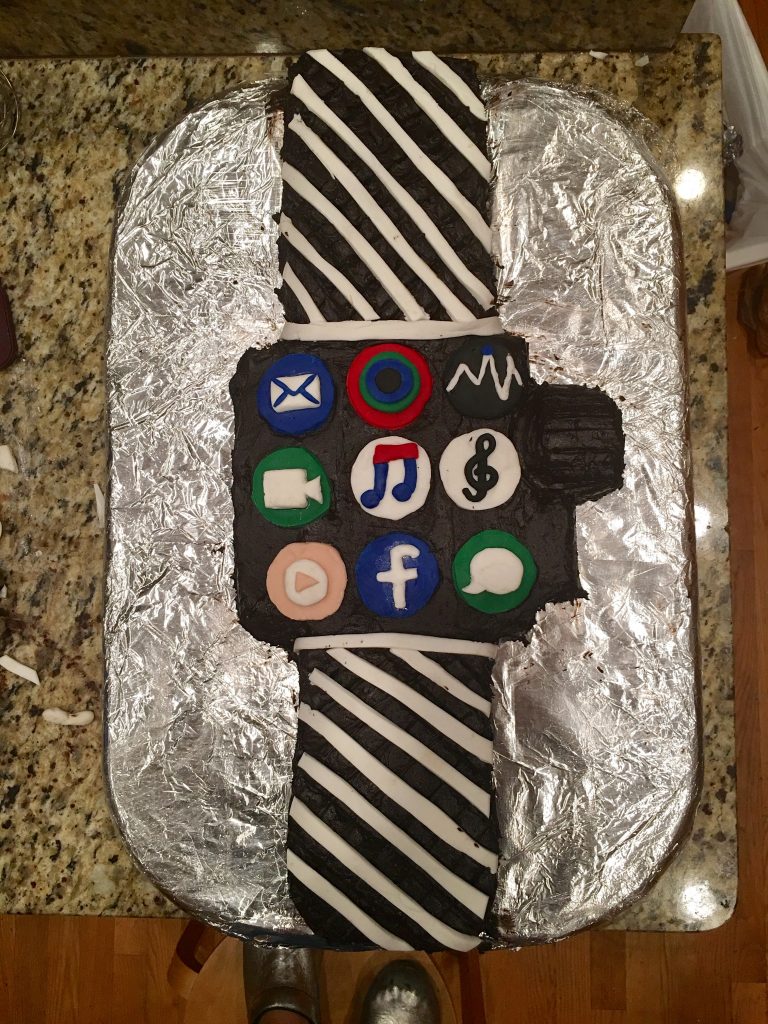
Apple Watch Birthday CakeTalking about baking the Apple Watch birthday cake, Dr. Grossfeld explains that she really only bakes once a year outside of an occasional batch of cookies and apple or cherry pie.

I wouldn’t even come close to calling myself a baker. I also start with the mindset every year a couple days before Adam’s birthday that baking cake can’t be much more technical than performing a rotator cuff repair and I can perform a great rotator cuff repair.

Discussion of the process:

The birthday cake making process started with going to Google Images and searching “apple watch cake.” Dr. Grossfeld explains:

I found several ideas that I combined. The next step was finding the best recipe. By googling “best moist chocolate cake” I found what sounded like the perfect recipe plus it had an icing recipe attached. See below for both recipes. When making the cake I applied similar principles that I use in the operating room . For example, mixing all the ingredients is just like mixing the cement used in a total knee or hip replacement.

Adam and my husband are dark chocolate fans so I substituted Dark Hershey’s chocolate for the regular chocolate cocoa that was recommended.

Still not 100 percent sure how I was going to fashion and piece the apple watch birthday cake together while I was mixing the ingredients I decided that more baked cake to work with would be better. So I doubled the recipe for the cake and the icing. Once the cakes were baked I got out my Apple Watch and looked it very closely trying to decide what were the distinguishing feature of that watch versus any other watch.

I did not have the 9 inch cake pan like the recipe called for but had three 8×8 inch pans from the prior year’s cake so I greased and floured all three of them up. Again, because I am not an experienced baker I was not exactly sure how much batter to put in each pan without it rising as it baked to spill over the side of the cake pan. it worked out well. Sometimes it’s better to be lucky than good.

Last year was the first year I used Fondant icing . Fondant is a ready-made colored icing that can be rolled out with a rolling pin and comes in different basic colors. It has the consistency of play dough. Fondant is great for cutting out shapes and decorating the major downside is it also tastes like play dough .

As the cakes were cooling Adam and I picked out nine apps that looked like there were fairly easy to make out of the Fondant icing and were ionic to Apple . We then started the cut and paste process of using the different colored fondant and cutting tools. When purchasing the Fondant at Walmart I noticed they sold a set of relatively inexpensive cutting tools and knowing that in the operating room not having the right tool can make or break you so i tossed them into my shopping cart.

As we made the apps we glued them together with water. As they were finished I  laid  hem out on the back side of the the upside down empty center cake pan to make sure they fit properly . I tried to organize them so that the different colored apps were evenly spread out.

I then covered a larger wooden cutting board with aluminum foil and saran wrap as my base plate. The next step was to cut the different cakes up into pieces of the Apple Watch and connect them with toothpicks and the chocolate icing I made. I applied the same principles like I do in the operating room when internally fixing a fracture with hardware or applying a cast in the office. Just slightly different materials …similar basic principles.

Using Adam as my critic each step on the way on the cake construction the parts came together fairly well. The icing was applied and them the fondant apps and strips on the watch band .

The apple watch birthday cake made it successfully to the party. An unseen issue was the kids were fighting over what app they wanted as their piece of cake . No worries it was worked out successfully and everyone got their app or at least half of the app they requested.

Extreme Chocolate Cake (used to make an Apple Watch Birthday Cake) and Icing Recipe:

www.allrecipes.com

Recipe by: RACH56 (per the website) Thank you RACH56 you are a recipe genius!

2 cups of white sugar

1 3/4 cups of all-purpose flour

3/4 cup unsweetened cocoa powder ( I substituted Dark Hershey Chocolate powder here)

1 1/2 teaspoons baking soda

1/1/2 teaspoons of baking powder

1 teaspoon of salt

2 eggs

1 cup of mile

1/2 cup of vegetable oil

2 teaspoons vanilla extract

1 cup of boiling water

  1. Preheat oven to 350 degrees

2. Grease and flour two 9 inch cake pans

3. In a medium bowl, stir together the sugar/ flour/ cocoa/ baking soda/ baking powder and salt

4. Add the eggs , milk, oil and vanilla

5. Mix for 3 minutes with an electric mixer

6. Stir in the bowling water by hand

7. Pour evenly into the two prepared pans

8. Bake for 30-35 minutes in the preheated oven until a toothpick inserted comes out clean

9. Cool for 10 minutes before removing from pans to cool completely (more…)

What is SI Joint Pain and What Causes it?

The sacroiliac joint is responsible for connecting the sacrum bone at the bottom of the spine to the pelvis. While small, this joint is very strong as it provides stability and absorbs shock to this area. It is triangular in shape and is formed by the fusion of several vertebrae during development. You can even see these joints on the surface of your back as they look like two small dimples on each side of the lower back and above the buttocks.

The sacroiliac joint allows your hips, legs and spine to function properly without pain or added pressure. If you’re experiencing pain in this joint, it can be tricky because it is often caused by too much activity or too little activity. Usually if you feel pain in the lower back, hips and groin, this means that your SI joint is being overworked. Yet if the pain is centralized to your lower back and buttocks and travels down your leg, the SI joint pain could be caused in part by inactivity.

While too much activity and not enough activity can be causes of SI joint pain, pregnancy is also a common cause of this condition. The added pressure and weight can cause the SI joint to align abnormally. This is the reason why many pregnant women experience SI joint pain.

Symptoms of SI Joint Pain   

joint pain, lower back pain, SI joint pain

SI Joint pain is often felt in the back or buttocks. Sometimes SI joint pain radiates down one or both legs, all of the way down to the foot. This pain is often confused with a herniated disk or issues with the spine. Unfortunately, this pain tends to make sitting more difficult.

Diagnosis

If you have been experiencing this type of lower back and buttocks pain, SI joint pain is a possibility. You should consult a qualified physician for a thorough examination and accurate diagnosis. SI joint pain is typically associated with inactivity and over-activity, so if you have recently started an intense workout program or have been sitting more than usual lately, your pain could be linked. It is best to seek medical attention with this type of pain to rule out other medical conditions and to get the treatment you need to feel better.

Your physician will complete a historical and physical exam to understand your symptoms. He or she will then check your posture and will likely examine your walking gate. You may also have lab exams or X-rays to determine whether your pain is related to the SI joint. (more…)

The Real Dangers of Concussions

Sports are a great outlet for children to be active, develop social skills, and learn the importance of teamwork. According to The Boston Globe, three out of four American families with school-aged children have at least one playing an organized sport. This is a total of roughly 45 million children. It’s important that kids are allowed to play the sports that they love, and do it in the safest way possible. Unfortunately, injuries come with the territory, and some are more serious than others. Concussions are one of the most important sports injuries to recognize.

Concussions, soccer, football, concussion symptoms

The Centers for Disease Control and Prevention defines a concussion as a type of traumatic brain injury caused by a bump, blow or jolt to the head.  Concussions may also occur during impact to the body, causing the brain to shuffle back and forth within the skull. It’s reported that about 175,000 children per year are treated for concussions due to sports-related injuries nationwide.

Common Concussion Symptoms to Recognize

Concussion symptoms come in many different forms and have serious physical, cognitive, and emotional side effects. Some common symptoms of a concussion include: pupil enlargement, drowsiness, recurring headaches and slurred speech. In addition, many people suffering from concussions experience numbness, vomiting, confusion, and even loss of consciousness.If you are a parent, coach, teacher, or some other kind of caregiver to children, it’s important that you pay close attention to your child’s behavior after an injury. If symptoms seem to worsen, take them to the emergency room immediately. You should also seek qualified medical attention if symptoms do not improve in a timely manner.

Every athlete is different, but depending on the individual and the severity of the concussion, athletes are sometimes required to wait days, weeks, or even months before returning to athletic activities.Though good treatment for concussions is available, if possible it is always best to try to avoid these risky head injuries. Follow along for 7 best practices to help avoid concussions.

7 Best Practices for Avoiding Concussions

  1. Wear the Required Gear. Wearing the right protective equipment is often the difference between a minor versus a major sports injury. Be aware of the equipment that’s needed to ensure that your child is safe.
  2. Respect the Rules of the Sport. Rules are important. Game rules are put in place for a reason and it’s important that these rules are followed. Avoid illegal hitting and/or tackles to make sure that everyone stays safe.Concussions, soccer, football, concussion symptoms
  3. Teach the Basics. The best way to avoid sports-related concussions is to know the fundamentals of the game. By mastering certain techniques, it will help the athlete play the sport correctly.
  4. Build Neck Muscles. Studies have shown that by building neck muscles you can avoid a concussion. Young athletes who practice strengthening exercises for their neck will make their head less vulnerable to injuries.
  5. Stay Hydrated. Hydration is a key component in sports. Remember that athletes who want to perform at the top of their game need to drink lots of water. There is a direct relationship between concussions and dehydration.
  6. Listen to the Child. If your child is complaining of headaches or nausea after a hit, it is very important that you listen to them. If these signs are caught early on, you can make sure your child receives the medical attention that they need.
  7. Get Educated. Both parents and coaches are responsible for educating athletes on concussions and how to avoid them.

Preventing concussions should be a priority for (more…)

New Information on Chronic Exertional Compartment Syndrome

Some athletes experience exercise related pain in the lower leg caused by chronic exertional compartment syndrome. The American Journal of Sports Medicine published an excellent article on this in May, 2016. The research, by Dr. Winkes, took place at the Maxima Medical Center in Veldhoven, Holland.

Runners, soccer players and other distance athletes may experience chronic exertional compartment syndrome. It is a condition that plagues athletes with pain, tightness, numbness and tingling. These symptoms usually occur in the lower extremities with fitness. The symptoms subside with rest. As soon as athletes start to increase their activity level such as going out for a run, the symptoms return.

Overview of Compartment SyndromeChronic Exertional Compartment Syndrome in Athletes

There are four compartments to the lower leg: the anterior compartment, the lateral compartment, the superficial posterior compartment, and the deep posterior compartment.

The anterior compartment is the front compartment of the leg and it is most commonly affected. This particular article examines patients that have high pressures or chronic exertional compartment syndrome, localized to the deep posterior compartment only.

Treatment for Chronic Exertional Compartment Syndrome

Treatment for chronic exertional compartment syndrome typically starts with rest. After adequate rest, physical therapy is often beneficial. Other things that help treat compartment syndrome include: adopting a forefoot strength running technique and shoe wear modification. Compartment pressures are tested in the office if those symptoms do not resolve with the above-mentioned treatment recommendations.

Diagnosing and Testing for Compartment Syndrome

A physician testing for compartment syndrome places a pressure catheter into the athlete’s leg in each compartment. Then the athlete will run on a treadmill and to monitor whether the pressure in the compartment increases. If the pressure increases abnormally, then the athlete has chronic exertional compartment syndrome. Some athletes have all four compartments of the leg affected. While other athletes just have the anterior compartment affected. And some athletes may just be affected in the posterior deep compartment.

Discussions and studies noted that surgical technique is not as successful when the posterior deep compartment pressure is involved.

Compartment Syndrome Research conclusion

This prospective study looks at 44 patients who have isolated deep posterior compartment chronic exertional compartment syndrome. Seventy-one percent of the patients benefited from a fasciotomy. This is a surgical technique where the surgeon goes in and releases the fascias surrounding that particular compartment. All of the study participants had deep compartment chronic exertional compartment syndrome in the lower leg. (more…)

Hip Pain During Pregnancy

Causes of Hip Pain During Pregnancy

If you’re experiencing hip pain during pregnancy, this is often completely normal. Hip pain is especially common during the third trimester. This is because your body is preparing for labor. During this time, your body release hormones that allow your connective tissues to relax, soften and expand. This allows the joints and ligaments near your pelvis to loosen and become more flexible. This is especially important for a healthy birthing experience. Additionally, many pregnant women with hip pain are sore on the side of the body where their baby tends to rest.

Sometimes lower back pain is associated with hip pain during pregnancy. As your pregnancy moves closer to full-term, you may start to notice changes in your posture. This is often paralleled by the increasing weight of your baby.

hip pain during pregnancy tips and relief

Megan is an X-ray tech with Orthopaedic Specialists. She has worked throughout her pregnancy and she is scheduled for a C-section soon. Congratulations Megan!!

While hip pain for pregnant women is common, it’s always advisable to pay close attention to your body. If you ever experience sharp, stabbing pain in your hips and lower body, you should consult a physician immediately.

Also, any lower hip pain that begins to wrap around your stomach and on either side of your body could be associated with preterm labor. It’s important to understand the difference between common hip pain symptoms and pain that could indicate other issues.

9 Tips to Ease Hip Pain During Pregnancy

And as any pregnant woman can attest, hip pain is just one of the many symptoms of pain that may come along with pregnancy. (more…)

Symptoms of the Zika Virus: An Overview

Zika Virus SymptomsFor many people living in tropical regions in Central and South America, the Zika virus has been a concern since the 1950s. Recently, the Zika virus has spread at an alarming rate. And now the virus has traveled to North America with 14 known cases in Miami, Florida in August 2016. This virus is extremely worrisome for pregnant women or those looking to become pregnant. The Zika virus causes serious birth defects in children born to a Zika infected woman.

Because of the seriousness of this virus, it’s extremely important that the public recognize Zika virus symptoms and take proper precautions. The Zika virus can spread through infected mosquito bites or through sex with an infected partner. Recognizing Zika virus symptoms is the first step to prevention with the Zika virus. It’s also important to note that although four out of five people have visible symptoms, according to Medical Daily, some people are symptom-free and unaware that they are suffering from the virus.

Zika virus symptoms are mild, but there have been extreme cases that have required individuals to be hospitalized. Most Zika symptoms last for a couple of days and for as long as a week. If you have traveled abroad recently to a high risk region, you should listen to your body and notice any unfamiliar changes that are common Zika virus symptoms.

6 Zika Virus Symptoms

  1. Headaches

    Headaches are often the first symptom that many infected people first experience. It is important to recognize the difference between your normal sinus headache and one connected with the Zika virus. Also, if your headache becomes severe to the point where you experience sound and light sensitivity, and nausea, you may want to see a physician.

  2. Rash

    According to NBC News, a Zika rash occurs in about 90 percent of those that have been infected with the virus. Usually it starts on the hands and arms and then moves to cover the whole body and down to the feet. This rash appears to include red, raised bumps that become itchy and uncomfortable.

  3. Fever

    People infected with Zika virus begin to run a fever as symptoms progress. Often the fever is mild and does not exceed 103 degrees. If your temperature increases, you will want to drink plenty of water and get some rest. As always, if your temperature is running high consistently, you will want to seek medical attention.

  4. Joint Pain

    Pain and a burning sensation in your wrists, knees and ankles is a very common symptom of the Zika virus. This sudden onset of pain and inflammation can look like arthritis symptoms. It is especially important to notice the timing of this pain, if you are returning from the U.S. after having visited a high risk region.

  5. Muscle Pain

    Along with joint pain, individuals infected with the Zika virus sometimes experience symptoms of muscle pain and weakness. This may become especially noticeable during your regular physical activities. Remember to pay attention to your body and relieve this pain by resting and icing the affected muscles.

  6. Conjunctivitis

    Itchy, red eyes that appear to look bloodshot have been reported as a common symptom of the Zika virus. If you suddenly experience this symptom, make sure you rule out allergies or times when your eyes may have come in contact with pollutants, chemicals or other substances.

If you experience any of these symptoms following international travel or sexual contact, you should seek medical attention immediately. While the symptoms are mild, it is important to identify the zika virus through a blood test. Currently there are no vaccines or medications available to treat the zika virus. You can use Tylenol or acetaminophen to help manage the pain. Do not use Ibuprofen and aspirin as they can raise the risk of bleeding. Lastly, once a person has been infected by the zika virus, he or she is likely to be protected against future infections. Scientists and health providers are still working to discover more information about the zika virus, so at this time the research is still incomplete.

For more information on the Zika virus, Zika virus symptoms, or cases of joint and muscle pain, call Dr. Grossfeld’s office at 502-212-2663.