Osteoarthritis Treatment and Physical Activity

osteoarthritis treatment and physical activityLight physical activity yields significant benefits for those suffering from osteoarthritis, according to latest research. Lead scientist Dr. Dorothy Dunlop at the Feinberg School of Medicine at Northwestern University found that staying as physically active as possible is very beneficial to people a they get older.

In a study with about 1,700 adults between 45 and 79 years of age, participants wore accelerometers (devices that tracked their movement including intensity level) for about 7 days. After two years the researchers reached back out to the study participants to see if they had developed any physical disabilities over the 2 year period.

Researchers found that the people who regularly participated in light physical activity like vacuum cleaning, pushing a shopping cart, or walking leisurely, were one third to one half less likely to have experienced a disability, as compared to the individuals who engaged in the least amount of regular light activity.

This is an important finding showing that doing even light activity has benefits in terms of osteoarthritis treatment. Another interested benefit of light physical activity was that it helped slow down the disease progression for those suffering from some type of disability. (more…)

Benefits of Physical Activity for Seniors

Benefits of physical activityEngaging in Sustained Physical Activity Good for Seniors – Older people who stay physically active may be less likely to experience heart problems like a heart attack, according to the latest research. Exercise helps a person’s heart by cutting down on the risk of heart rhythm problems.

Looking at data from nearly 1,000 adults with an average age of 71, researchers including Dr. Luisa Soares-Miranda at the Harvard School of Public Health found that heart rate variability was linked to physical activity. Heart rate variability is the variation in time between each of your heartbeats. The more active people were, the few abnormalities they experienced.

According to the research findings, older individuals with the highest levels of physical activity were about 11 percent less likely to have a heart attack or to suffer from sudden cardiac death than those who were the least active. (more…)

Overuse Injuries and Mountain Biking

Mountain biking and overuse injuriesMountain Biking and Overuse Injuries Researchers at Northern Arizona University led by Dr. Michael Lebec looked at whether there were injury differences between mountain bikers engaged in single-speed riding and those with bikes that have multiple gears.

According to the research findings, mountain bikers commonly experience overuse injuries. Just over 400 mountain bikers were surveyed in this study to report injuries sustained over the course of the prior year.

Just over three out of five respondents reported some type of overuse injury with the most common being in the lumbar/spine, knee, hands and wrists, and cervical spine. Importantly, individuals riding on a single speed bike did not have a higher overuse injury rate than those on bikes with multiple gears. (more…)

ACL Injury Risk and Soccer Players

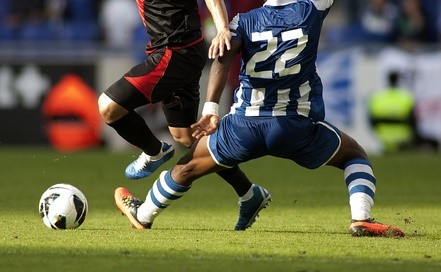
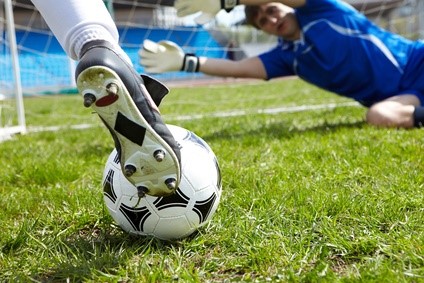
Injuries to the anterior cruciate ligament or ACL injury risk is a common sports injury for many athletes, especially in certain sports. Soccer is a sport that has a higher than average ACL injury risk.

Research led by Dr. Brophy and colleagues (2014) at Washington University Orthopedics examines the mechanisms of ACL injury risk for soccer players.  In this sports medicine study, videos of ACL injuries for about 55 male and female soccer players were analyzed to understand the injuries affecting the anterior cruciate ligament.

About three fourths of the injuries happened when the other soccer team had the ball and the athlete suffering from the injury was playing a defense role.

Gender differences in regards to ACL injury were also observed. For example, female soccer players were more likely than males to be defending when they experienced an ACL injury. In addition, female soccer players were more likely than males to experience a non-contact ACL injury in their left knee.

The most common soccer action leading to an ACL injury was tackling and to a lesser extent, cutting. Most ACL injuries happened from some type of contact. (more…)

Physical Activity For Kids A Priority

Many kids in the United States need more physical activity, as reported by the American College of Sports Medicine. 

According to Dr. Russell R. Pate, a professor at the Arnold School of Public Health at the University of South Carolina, only about one out of four children in the U.S. are getting the recommended amount of physical activity each day.

The current physical activity for kids guidelines recommend at least 60 minutes of moderate activity for kids ages 6 to 15 years. Moderate activity can include a wide range of things like brisk walking, dribbling a basketball, exploring a playground, hiking in the woods, or slow jogging.

Perhaps even more troubling, the percentage of kids that spend half of their day being sedentary goes up as kids get older. Just 8 percent of kids between 12 and 15 years of age get more than an hour of (more…)

Sleep Quality and Athletes

Getting Enough Quality Sleep Proves A Major Part Of Good Athletic Conditioning

According to Harvard Medical Professor Dr. Czeisler, sleep plays a fundamental role in improving athletic performance.

As the director of Harvard’s Division of Sleep Medicine, Dr. Czeisler is sometimes called the “sleep doctor.” He consults various athletic teams all around the country and has also worked with the Secret Service and NASA.

Some of his recommendations related to sleep and sleep quality include the following:

  1. Get enough sleep (between 7 and 9 hours) each night
  2. Take pre-game naps
  3. Sometimes consider substituting naps for practice time

Another interesting piece of advice involves sleeping after a lesson or game.

Dr. Czeisler explains “If you don’t sleep the night after training, then even if you sleep the next night or the next night, you never learn.”   (more…)

Preventing Skin Cancer During Outdoor Activity

Sunny Summer Days are Almost Here – Learn 6 Tip to Prevent Skin Cancer

Did you know that May is national skin cancer detection and prevention month? An estimated 9,710 Americans will die this year due to melanoma. It is the most common type of cancer for young adults between 25 and 29 years old and the second most common for those ages 15 to 24.

Early detection is extremely important with skin cancer since it is often very treatable if you identify it early. For people who enjoy spending a lot of time outside gardening, swimming, walking, and engaging in other outdoor activities during the beautiful spring and summer months, it is particularly important to be aware of the risks of skin cancer and how to protect yourself.

Here are 6 things you can do to protect yourself if you are interested in preventing skin cancer during the hot, sunny days of spring and summer.

1. Wear a hat, sunglasses, and protective clothing.

2. Use sunscreen that has UVA and UVB coverage with an SPF of 30 or higher on any exposed skin areas including hands, feet, and ears. (more…)

A Comparison of ACL Injury Rates for Female Athletes Playing Lacrosse and Field Hockey

ACL Injury Rates for Female Athletes – Comparing Lacrosse and Field Hockey  

Researchers led by Dr. Hillary J. Braun and colleagues looked at the differences in risk factors for ACL injuries for female athletes who are field hockey players compared to lacrosse players. Prior research has suggested that ACL injuries tend to be more common for women playing lacrosse than field hockey.

In order to assess the biomechanical risk factors for female lacrosse and field hockey players, researchers attempted to understand why lacrosse might yield an increase in ACL injury incidence. Researchers recognized the different posture demands of the two sports, with field hockey players often in a crouching position that is forward flexing, and lacrosse players having a more upright stance with a lot of overhead throwing.

The study recruited 31 Division I NCAA female athletes from field hockey and lacrosse. They were asked to do four tasks three times with each leg. This included bilateral drop jumps, single leg drop jumps, single leg jumps onto a bosu ball, and a 45 degree anticipated cut. (more…)

ACL Tears and ACL Injury Prevention

Preventing ACL Tears in Kids – Find Out More from the Latest Research

A clinical report published by the American Academy of Pediatrics (AAP) is working to cut down on the risk of anterior cruciate ligament (ACL) tears for kids, especially girls. ACL tears are a common sports injury for people of all ages, and females are at higher risk for an ACL tear.

Some of the sports most commonly associated with ACL injury include gymnastics, basketball, lacrosse, and soccer.

Many kids who experience ACL tears end up needing ACL surgery to repair the injury. One of the major signs of an ACL tear involves a feeling like the knee is unstable and may give way.

As explained by Dr. Cynthia LaBella, sports medicine physician at the Ann & Robert H. Lurie Children’s Hospital of Chicago, when suffering from an ACL tear, “Most athletes will feel their knee give out and feel a pop.” Swelling is another common side effect of an ACL Tear.  (more…)

Factors Influencing Return to Play Following ACL Surgery in Division 1 Football Players

ACL surgery for football playersResearchers led by Dr. Jimmy Daruwalla and colleagues published in the April 2014 in the Orthopaedic Journal of Sports Medicine looked at factors that influenced return to play for Division 1 college football players after undergoing ACL surgery.
“Return to Play” was defined as a player being able to engage fully in football practice and/ or football games after ACL surgery. Information from 184 college football players was analyzed and the overall return to play rate was 82%.
About three-fourths of the football players were able to return to football at a level of equal or even higher play than they did prior to ACL surgery. A football players depth chart prior to ACL surgery had a significant association with return to play. For example, 95% of football players who were starters returned to play after ACL surgery compared to 73% of players who rarely played.
College football players who were on scholarships also returned to play at a higher rate than those who were not. Years of experience playing college football also had an effect on return to play with 83% of first year students returning to play football following ACL surgery compared with 73% of seniors. (more…)