
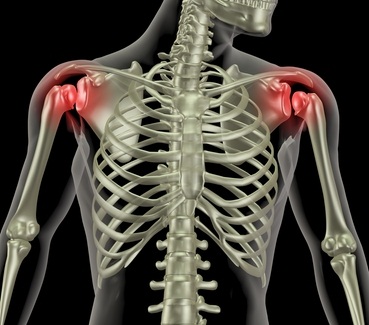
 The shoulder is the most commonly dislocated joint in the body, with approximately 2 percent of Americans suffering from a dislocated shoulder at some time in their life.
An interesting study performed at the Orthopedic Biomechanical Laboratory in Long Beach, California, run by Dr. Patrick McMahon and colleagues, looked at the amount of force that was needed to produce a dislocated shoulder. This study was published in the August 2013 issue of the Journal of Shoulder and Elbow Surgery. Follow along to learn more about the research findings.
A dislocated shoulder occurs when the upper arm bone, or the humerus, is dislocated from the glenoid, the cup of the shoulder joint. There are several different ways the shoulder may dislocate:
- Out the front of the shoulder (anteriorly)
- From the back of the shoulder (posteriorly)
- Under the shoulder joint (inferiorly)
There are approximately 5.6 million people between ages 18-70 that have had a shoulder dislocation. The most common cause or etiology of a shoulder dislocation is the result of a traumatic event. The most common direction the dislocation occurs is anteriorly, out the front, of the shoulder. (more…)







Recent Comments