
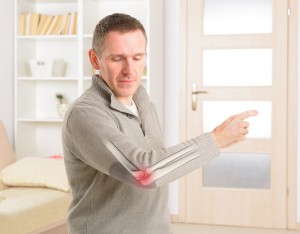
 Unless you are an elbow specialist or orthopedic surgeon, you probably rarely think about your elbows unless you’ve recently hit your “funny” bone. While our elbows may exist without much thought, they are complex joint systems that makes a multitude of daily activities possible. The elbow is a hinge joint system made up of three bones: the ulna, radius, and humerus. Thanks to these bones and a system of nerves, muscles, and tendons, we are able to bend and straighten our arms. This complex system that makes our elbows also allows us to twist our wrists and make a variety of other movements.
Elbow injuries are common occurrences in an orthopedic surgeon’s office. More often than not, elbow injuries arise from overuse. Common elbow injuries that are of orthopedic concern include: Golfer’s elbow, Tennis elbow, and tears to the Ulnar Collateral Ligament (UCL). These injuries can all be prevented. However, a lot of people aren’t aware of prevention methods and other facts about the elbow that could help keep them out of an orthopedic surgeon’s office. To help others, we’ve outlined a collection of five facts about the elbow from Dr. Stacie Grossfeld, an orthopedic surgeon and elbow specialist, in Louisville, Kentucky.
5 Interesting Facts about the Elbow and Elbow Injuries from an Elbow Specialist
-
-
Most athletes are familiar with the Ulnar Collateral Ligament (UCL) and its vulnerability.
However, not all athletes are aware of the other vulnerable parts of the elbow including: the epicondyles which flare from the humerus and have muscles attached to them, as well as the olecranon which forms the pointed part of your elbow and the coronoid process. Athletes commonly tear their UCL, but fractures to the other projections in the elbow are more common among children. Osteoarthritis often affects these areas, as well, and can often result in a complete elbow replacement if the condition becomes detrimental enough.
-
As previously stated, athletes and children are the most common parties to obtain elbow injuries.
One of the leading causes of elbow injuries in children is an unsuspecting backyard toy – the trampoline. In fact, trampolines are the cause of so many broken elbows and wrists among children that the American Board of Pediatrics issued a warning against recreational trampoline use.
-
The main muscles that control your elbow are your biceps and triceps.
Your biceps are located on the front of your upper arm and bend your elbow while your triceps, on the back of your arm, straighten your elbow out. These muscles work together to give us the power to lift objects and perform other functions. However, there are 21 other muscles called flexor and extensor muscles that help control the elbow and provide it with stability as well as flexibility.
-
Tennis elbow is one of the most common elbow injuries that orthopedic surgeons see.
Despite the name, you don’t need to play tennis to get tennis elbow. The medical term for tennis elbow is “lateral epicondylitis. While tennis players are more prone to this injury, it can happen to anyone. Lateral epicondylitis is the degeneration of the tendons that are on the outer side of the elbow. Repetitive movements often cause lateral epicondylitis and an elbow specialist will recommend seeking medical attention as soon as the pain starts.
-
Orthopedic surgeons and elbow specialists have noticed a recent rise in cases of ulnar neuritis in the past 10 years.
Ulnar neuritis occurs when the ulnar nerve becomes inflamed and results in numbness or tingling sensations in the hand. Cases of ulnar neuritis have skyrocketed since the rise in smartphone usage. Orthopedic surgeons recommend that if you are experiencing ulnar neuritis that you put down your phone and monitor your ergonomics.
-
The elbow is a fascinating part of the body that often gets overlooked until it’s injured.
Prevention is key to avoiding an elbow injury. By learning more about the elbow, its anatomy, and functionality, you can easily prevent injuries. However, not all injuries are preventable. If you do suffer an elbow injury, it is most likely going to be from overuse or blunt trauma. Early treatment when overuse injuries start to arise can help prevent permanent elbow damage. If you start to feel pain in your elbow, contact an orthopedic specialist or elbow specialist as soon as possible. Additionally, blunt trauma injuries should be examined immediately and a treatment plan should be established to avoid permanent damage.
If you are suffering from elbow pain or have recently injured one of your elbows, contact Dr. Stacie Grossfeld immediately. Dr. Grossfeld is a double board-certified orthopedic surgeon with a focus in sports medicine who routinely treats and repairs elbow injuries. Dr. Grossfeld can be reached at either of her two office locations in Louisville, Kentucky by calling 502-212-2663.
 When you’re pregnant, you get to know your body in a way unlike any other. This happens as you experience a plethora of new sensations including some that are not all that pleasant. For instance: you may begin to feel soreness, stiffness, or even downright pain in your elbows, fingers, knees, hips, and other joints. Joint pain during pregnancy is actually fairly common among women. This is especially true for women experiencing first-time pregnancies. This stiffness and pain can make it difficult for a woman to get around comfortably in her day-to-day life.
 Though Della enjoyed a successful career in banking, her true passion has long been as a competitive athlete. She started her athletic career as an avid runner. After successfully completing more than 25 marathons, she decided she was ready for a new kind of challenge so she decided to try a triathlon. A triathlon can be short, medium or long distance. A short distance is called a “sprint,” a medium distance is either a half Ironman or 70.3 mile distance and the long distance triathlon is an Ironman which is 140.6 mile distance.
 Della Keeps Her Eyes on the Prize: The Road to Kona
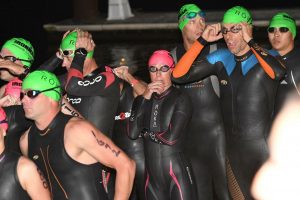 Triathlon Training at an Elite Level: The Physical
 Looking Ahead to What’s Next – “I can; I will!”
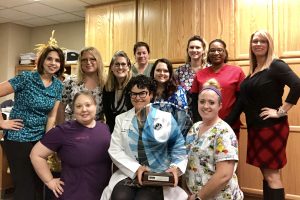 In receiving the award, Dr. Grossfeld recognized all of the contributions various members of the
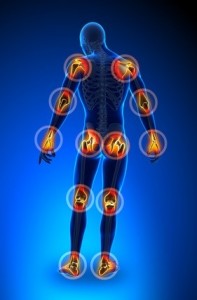 Last week, Orthopaedic Specialists published an article entitled

 If every school had an athletic trainer as dedicated, knowledgeable and passionate about their work, there’s no doubt the number of youth sports injuries would significantly drop, while the overall athletic performance would noticeably increase. But Kelly Dike is one of a kind and it’s certain that very few school athletic programs have an athletic trainer as dedicated and experienced.
 After graduating from high school, Kelly attended
Recent Comments